Table of Contents
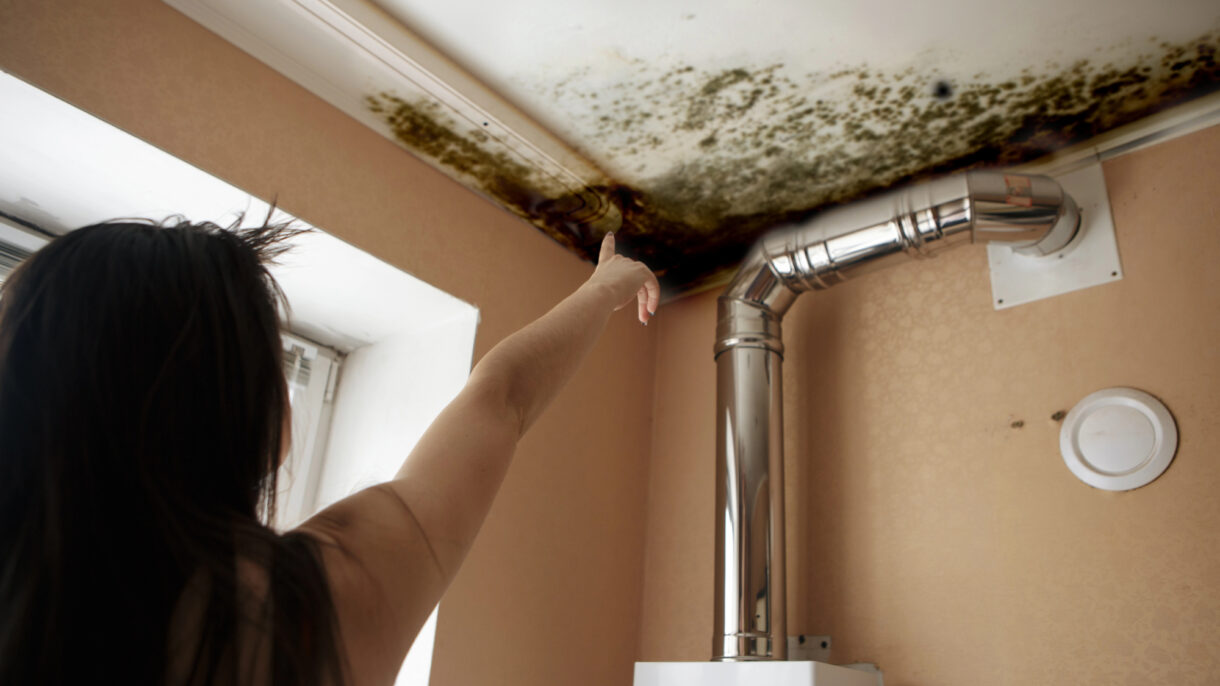
Black mould in your home is more than an unsightly problem. It’s a sign of damp and mould that can pose a real health risk, damage your property, and keep recurring if the underlying cause isn’t fixed. Damp and mould are now recognised in the UK as serious issues that can contribute to respiratory illness and, in extreme cases, even death.
This guide explains what causes black mould growth, how black mould exposure and general mould exposure can affect your health, and the safest ways to get rid of black mould and prevent mould returning. It’s written for UK homes and draws on current guidance on damp and mould in homes from the UK government, NHS and housing charities.
What is black mould and why does mould grow in homes?
Mould is a type of microscopic organism that thrives in damp, poorly ventilated places. “Black mould” is a general term people use for dark mould patches on walls, ceilings, windows and other surfaces.
One species you may see mentioned is Stachybotrys chartarum, sometimes called “toxic black mould” or “toxic mould”. But indoor mould growth (the mould growth we frequently see in homes) is often caused by other common species such as Cladosporium and Aspergillus, which can also appear dark green or black.
From a health point of view, the key issue is the overall frequency of damp and mould, not just one specific type of mould. If you can see visible mould, whatever the colour, or you suspect mould in a property, it should be taken seriously.
Mould spreads by releasing mould spores into the air. These tiny spores land on cold or damp surfaces and, if conditions stay right, mould thrives and continues to grow.
What causes black mould growth and damp and mould in homes?
Black mould growth is almost always linked to excess moisture and poor ventilation. The main causes of black mould growth include:
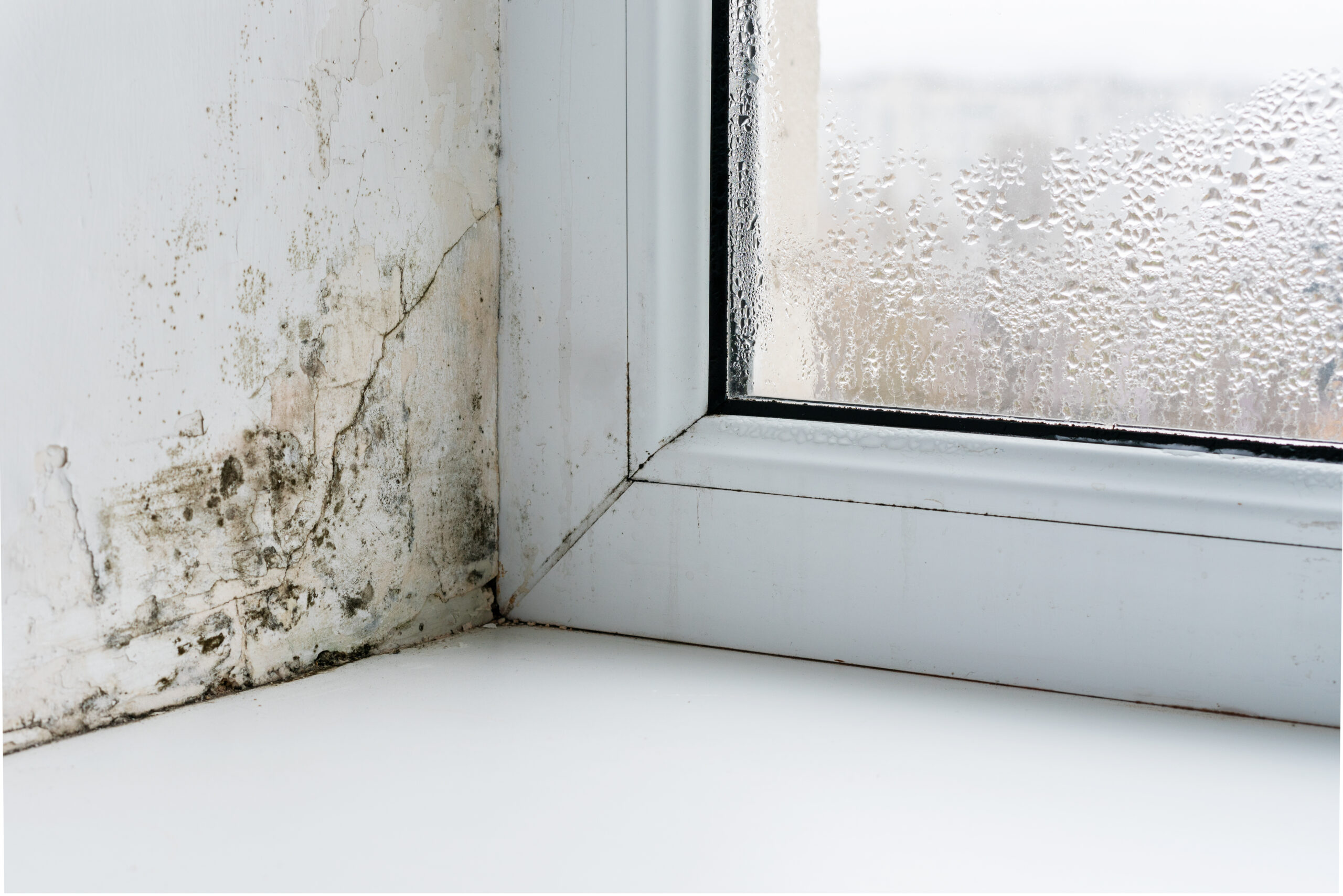
Condensation – warm, humid air from cooking, bathing or drying clothes indoors hitting cold surfaces such as windows, external walls and uninsulated ceilings. This is one of the most common causes of mould and condensation.
Penetrating damp – rainwater getting into the building through defective roofs, gutters, downpipes, pointing, render or poorly sealed windows and doors.
Rising damp – moisture travelling up from the ground through walls and floors where the damp-proof course is missing, bridged or damaged.
Leaks and plumbing issues – dripping pipes, overflows, cracked sealant around baths, showers or sinks that keep areas damp.
Cold bridges and poor insulation – structural elements that stay colder than surrounding surfaces, encouraging condensation and mould growth.
Rooms most at risk include bathrooms, kitchens, basements, unheated spare rooms and corners behind large furniture where air cannot move freely. When these conditions persist, they lead to black mould and other mould infestations.

How does black mould exposure affect your health?
The effects of damp and mould aren’t just cosmetic. Long-term mould exposure, including black mould exposure, can affect your health in a range of ways, especially if you already have underlying health issues. UK government and NHS guidance now emphasise that mould can cause significant respiratory problems.
Common physical symptoms of exposure to mould include:
- Coughing, wheezing and other respiratory symptoms
- A tight chest or shortness of breath, particularly in people with asthma
- Nasal congestion, sneezing and irritation (similar to mould allergies)
- Sore throat or recurrent chest infections
- Red, itchy or watery eyes
- Skin rashes and worsening eczema
For some people, mould may cause allergy symptoms such as sneezing and itchy eyes; for others, mould can cause more serious problems. Long-term black mould exposure and damp can lead to health issues, including asthma attacks and more frequent lower respiratory infections.
As well as physical health, living with damp and mould can affect your physical and mental health, increasing stress and anxiety about your home and family.
Who is most at risk from damp and mould?
Anyone can be affected, but the risk of health complications is higher for certain groups. Guidance on damp and mould in homes highlights the following groups most at risk:
- Babies and children
- Older adults
- People with asthma or other chronic lung conditions
- People with heart disease
- People with eczema or allergic conditions
- Pregnant women
- People with a weakened immune system (for example due to cancer treatment, long-term steroid use or organ transplant)
If anyone in your home falls into these groups and you suspect black mould in your home, speak to a GP or call NHS 111 if you notice new or worsening symptoms that may be linked to mould exposure.
Recognising signs of black mould in your home
You may have a mould problem if you notice:
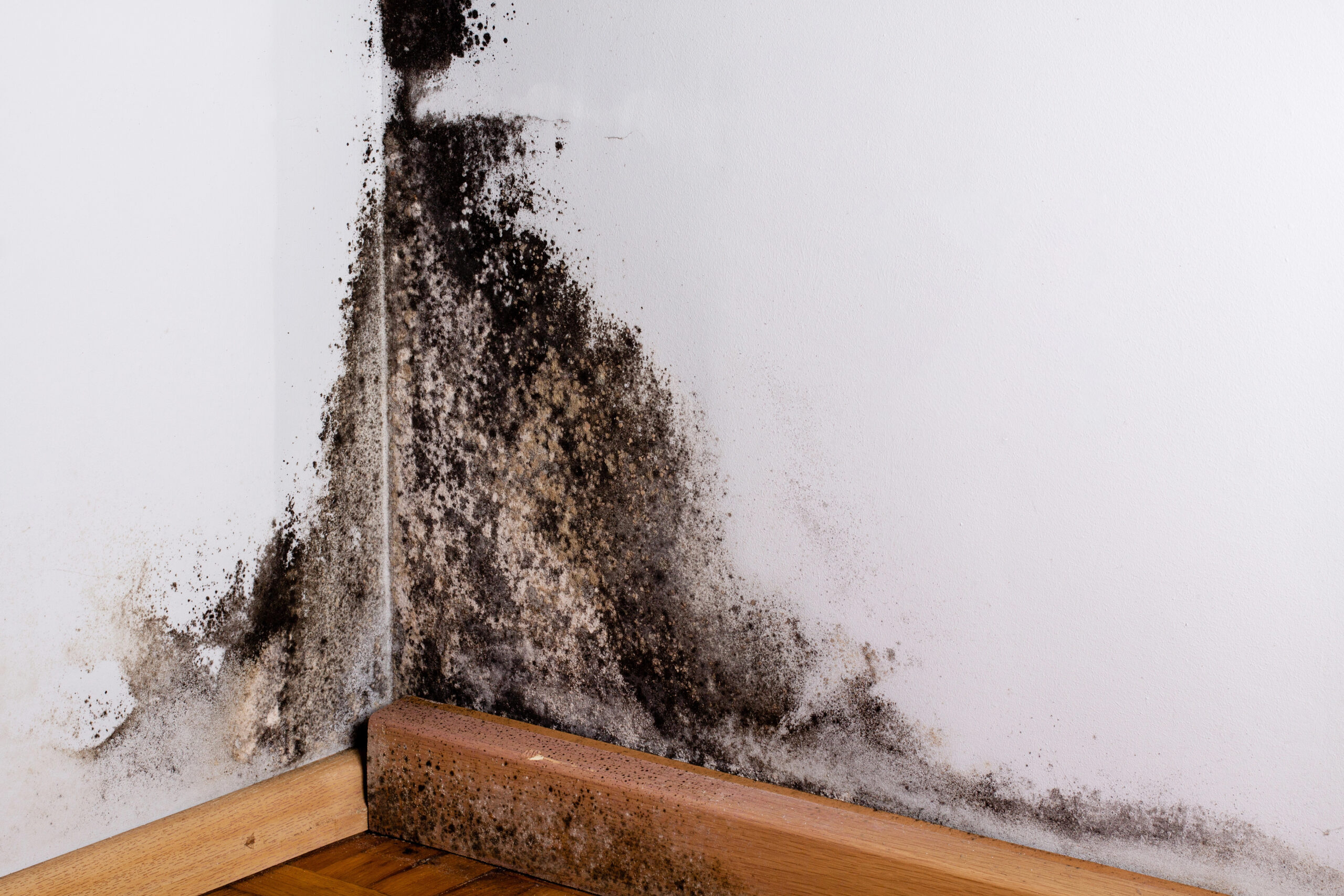
- Signs of black mould – dark green, brown or black spotting or blotches on walls, ceilings, around windows, on bathroom grout or silicone, and on skirting boards
- A persistent musty, earthy odour, especially in closed rooms or cupboards
- Peeling or bubbling paint and wallpaper
- Salt deposits (“tide marks”) on walls or patches that feel damp to the touch
- Regular condensation on windows or walls
Check behind large furniture, inside built-in wardrobes on external walls, and around cold corners. Black mould around these hidden areas is common because air circulation is poor.
Safe black mould treatment and mould removal for small areas
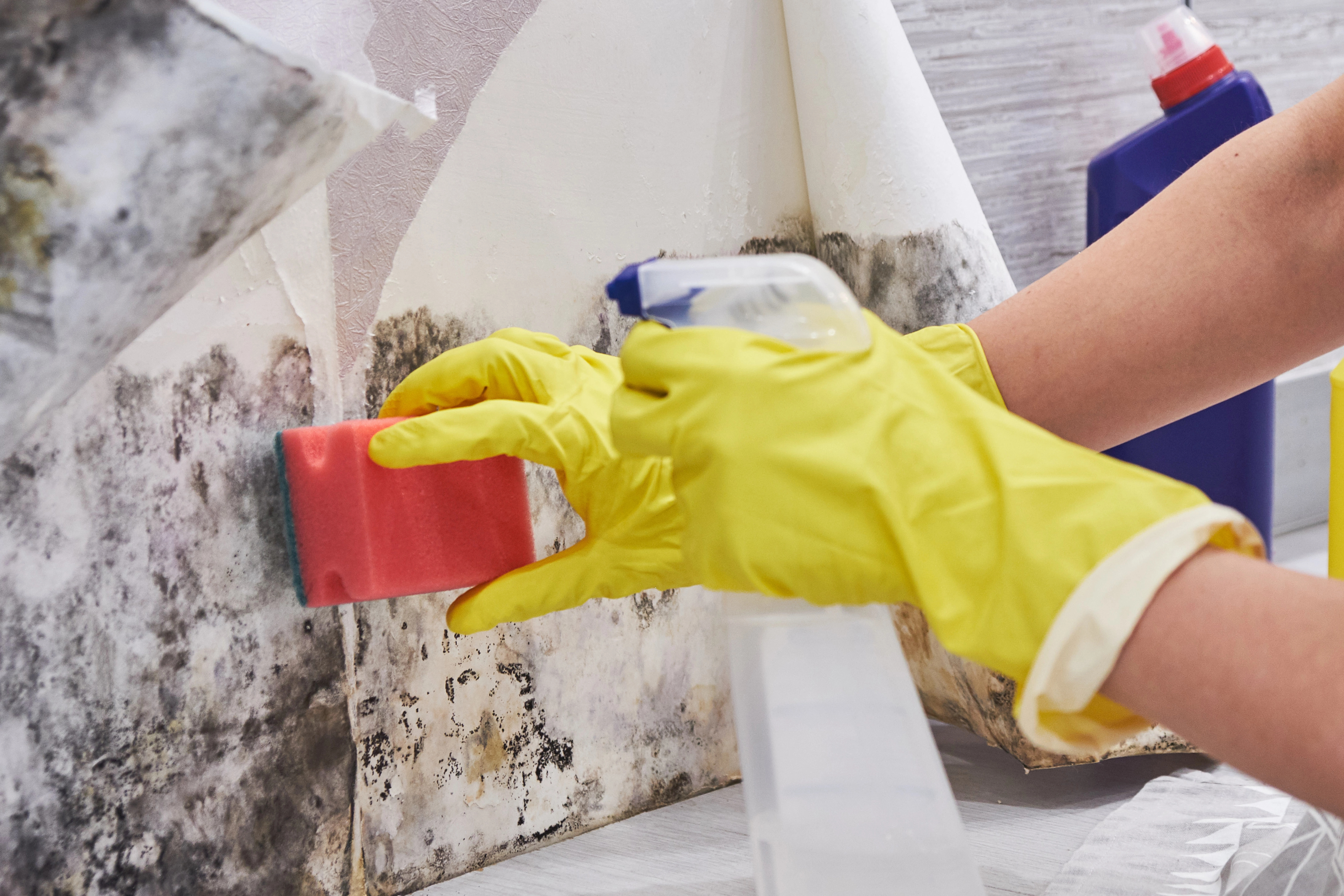
For small amounts of mould (usually up to about 1 m²) on hard, non-porous surfaces, current UK advice is that most people can generally get rid of black mould themselves, provided they take sensible precautions.
Before you start any mould removal or mould cleaning:
- Wear gloves and, ideally, a simple mask and eye protection, to reduce risk of exposure to spores
- Open windows for ventilation, but keep internal doors closed so mould spores from the air do not spread to other rooms
- Avoid dry brushing, vacuuming or scrubbing that might send spores airborne
Then:
Deal with the obvious source of moisture first
If there is a leak, roof problem or overflowing gutter, arrange repairs as soon as possible. Without this, any attempt to remove black mould is only a short-term fix.
Clean the mould off hard surfaces
Use a specialist mould remover or fungicidal wash that states it is suitable for mould removal and follow the instructions carefully. For light mould, some councils suggest starting with warm soapy water, then drying the surface thoroughly and applying a fungicidal product if needed. Use disposable cloths or paper towels and discard them afterwards in a sealed bag.
Dry the area thoroughly and ventilate
Wipe the surface dry with a clean cloth. Keep the room warm and well ventilated so moisture cannot linger, reducing the chance for mould to grow again immediately
Only then, redecorate if required
If you repaint, consider using a fungicidal paint or product specifically designed for mould prevention. Avoid simply painting over mould; this hides the problem but does not remove it.
These steps are suitable for small amounts of mould on hard surfaces. Deep mould infestations in plaster, wood or ceiling tiles often need professional assessment and may require removal and replacement of materials.
When should mould be treated by a professional?
There are times when mould be treated only by a professional with the right training and equipment:
- The mould covers a large area or several rooms
- The mould keeps returning soon after each clean
- There is clear rising damp or penetrating damp causing ongoing damp and mould in homes
- Mould is growing on soft furnishings, fitted carpets, insulation, plasterboard or deep within ceiling tiles
- People in the home have serious lung disease, severe asthma or are immunosuppressed
In these situations, the cost of ignoring the problem can be much higher than the cost of proper investigation and treatment. A specialist can identify the specific types of mould, the source of the damp and the best way to fix both the mould problem and the damp itself.
If any of these apply to your home, it’s a good idea to get a professional opinion. You can book a damp and mould survey with our team to find out what’s causing the problem and what needs to happen next.
Why damp and mould are a serious health risk
It’s easy to think a bit of mould in a bathroom is harmless. But damp and mould in homes are now widely recognised as a serious health risk that can lead to health issues.
- Mould can cause or worsen asthma and other respiratory conditions, especially in children.
- Mould may aggravate allergies and other long-term conditions.
- Living with persistent black mould fungi and damp may contribute to serious respiratory illness.
The death of two-year-old Awaab Ishak in 2020 from a severe respiratory condition caused by prolonged exposure to damp and mould in homes brought national attention to just how dangerous longstanding mould can be, particularly in poor housing conditions.
How to prevent black mould and mould growth from coming back
Effective black mould treatment isn’t just about cleaning away what you can see. To prevent black mould returning, you need to stop the conditions that allow mould growth in the first place. That means reducing damp, improving ventilation and managing humidity.
Reduce moisture and humidity
- Put lids on pans when cooking and use extractor fans in kitchens and bathrooms.
- Avoid drying clothes indoors where possible. If you must, dry them in one room with the window open and door closed.
- Ensure tumble dryers are correctly vented to the outside.
- Fix leaks, overflows and dripping taps promptly to limit damp patches.
Improve ventilation
Good ventilation is essential to stop mould from growing and to prevent mould:
- Open windows regularly for short “bursts” of fresh air, where it’s safe to do so.
- Keep trickle vents and air bricks clear.
- Avoid pushing large furniture directly against cold external walls.
- Use and maintain extractor fans in kitchens and bathrooms, and let them run on after cooking or bathing.
Keep a steady, safe temperature
Very short bursts of high heat followed by long periods of cold can encourage condensation. A reasonably steady background temperature, often around 18–21°C in cold weather, is usually better for both comfort and preventing damp and mould.
Guidance on damp and mould if you rent your home
If you rent and notice black mould in your home or ongoing damp and mould, report it to your landlord or managing agent in writing as soon as possible, ideally with photographs.
In the UK, landlords (especially social landlords) have clear responsibilities to deal with serious damp and mould in homes, particularly where it poses a risk to health and safety or makes the property unfit for habitation.
Following the Awaab Ishak case, new rules often referred to as Awaab’s Law now require social landlords in England to respond more quickly to significant mould within homes and other serious hazards, including investigating within set timeframes and completing works within a reasonable period.
Housing charities such as Shelter provide clear guidance on damp and mould, including:
- How to report issues formally
- What your landlord is responsible for
- What to do if they don’t act
If you believe mould can cause your immune system or lungs significant harm because of an existing condition, mention this to your GP and in your communication with the landlord.