Damp, mould and condensation are still some of the most common (and most disputed) issues in Scottish rented homes, especially in winter, in older stock, and in many a tenement flat where ventilation and heat loss can be challenging. In 2026, expectations on how quickly a landlord responds to reports of damp and mould are tightening further, with new Awaab’s Law regulations for Scotland being brought forward to set clearer time limits on investigations and repairs.
This guide provides basic advice for private landlords (and letting agents managing on their behalf) on handling damp reports. It focuses on what to check, what to document, how to respond when a tenant reports damp, and how to fix the root cause rather than repeatedly treating symptoms.
Important: This is practical guidance, not legal advice. If you’re unsure, seek professional help, especially where vulnerable occupants or significant health concerns are involved.
Table of Contents
Why this matters in 2026
Mould in your home is not just a cosmetic problem. Mould is a fungus, and prolonged exposure to it can worsen respiratory issues, particularly for children, older adults, and people with asthma or allergies. It can also lead to damage to the building if moisture is left untreated, including rot in timbers, crumbling plaster, and deterioration of finishes.
The death of Awaab Ishak (who lived in a home affected by severe mould) has driven a stronger “act quickly” approach across the UK, and Scotland is now legislating for faster investigation and action when damp and mould are reported.
Landlord responsibilities in Scotland: repairing standards and who is responsible
In Scotland, a landlord is responsible for keeping a rented property in a proper state of repair. For private renting, a home must meet the repairing standard, and if it doesn’t, a tenant can apply to the First-tier Tribunal for Scotland (Housing and Property Chamber).
From 2026, the repairing standard is being strengthened – through new regulations already laid in Parliament – so that a private rented home must be “substantially free from damp and mould”, in addition to meeting the existing structural and installation requirements [1]. Statutory guidance also makes clear that dampness and mould are unacceptable where they materially affect the health or comfort of occupants [2].
A simple rule of thumb:
- If dampness is caused by defects in the fabric of a building (leaks, cold bridging, missing ventilation, defective gutters, failed seals, etc.), the landlord is responsible for fixing the underlying issue.
- If the problem is purely day-to-day living moisture and can be controlled with normal heating and ventilation, the tenant has a part to play, but you still need to know the cause before blaming tenant behaviour. Shelter Scotland is clear that landlords must fix damp and mould caused by repair problems.
If the tenant has to escalate, the Housing and Property Chamber explains that the tribunal can decide whether the landlord has met the repairing standard and can order work to be carried out [3].
Awaab’s law in Scotland: what’s changing
Awaab’s Law protections are being introduced in Scotland, raising expectations on response times for damp and mould. Scottish Government updates in early 2026 confirm that the Investigation and Commencement of Repair (Scotland) Regulations 2026 have been laid at Holyrood. If approved, they will update the repairing standard and introduce new duties on landlords to investigate reports of damp and mould and to begin repairs within a set timescale.
At the time of writing, the draft regulations require landlords to complete an investigation within ten working days, provide a written summary to the tenant within three working days, and ensure that any required safety work is commenced within five working days, once the regulations are approved and in force [4].
For the private landlord, this is likely to mean more tenants will report damp earlier, less tolerance for delay, and increased pressure to get works underway quickly, particularly where condensation and mould may be affecting health.
Even before every detail is widely understood across the sector, the direction of travel is clear: when a tenant reports damp or mould, you’re expected to investigate promptly, communicate clearly, and fix the root cause, not just treat the visible patch.
These new duties will apply to both private residential tenancies and social housing, so landlords across the sector should expect closer scrutiny of how they handle damp and mould reports [5].

Understanding the types of damp (and why it matters)
Before you can fix anything properly, you need to identify the different types of damp. Most recurring issues arise because someone treated the surface (paint/bleach) but didn’t address the source.
Condensation damp
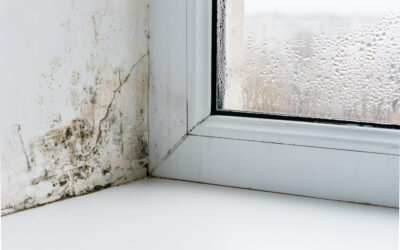
Condensation can occur when warm, moist air contacts cold surfaces (such as exterior walls, window sills, or uninsulated corners). You’ll often see water droplet marks on glazing, and black mould in corners, behind furniture, and around windows. Condensation can cause mould growth quickly if the home isn’t consistently heated and ventilated.
Key contributors:
- Not enough background ventilation (blocked vent, sealed trickle vents, broken extractor fan)
- Under-heating (especially in bedrooms)
- Drying laundry indoors (a big source of much moisture)
Penetrating damp
Penetrating damp is water coming in from outside. Common causes:
- Defective roof coverings, flashing, or masonry pointing
- Cracked render
- Leaking or overflowing gutters and downpipes
- Failed seals around windows/doors
This is firmly “landlord territory”, the tenant cannot fix the building envelope.
Rising damp
Rising damp is moisture from the ground travelling up porous masonry. It’s more likely in older properties and ground-floor flats. A bridged or failed damp-proof course can contribute (or there may never have been one in very old stock). True rising damp is less common than people think, but when it does occur, it requires proper diagnosis and targeted remedial work, not just repainting.
Damp or mould: quick signs landlords should look for
When you inspect (or when your agent does), don’t just look at the visible patch. Look for patterns that tell you the source.
Inside:
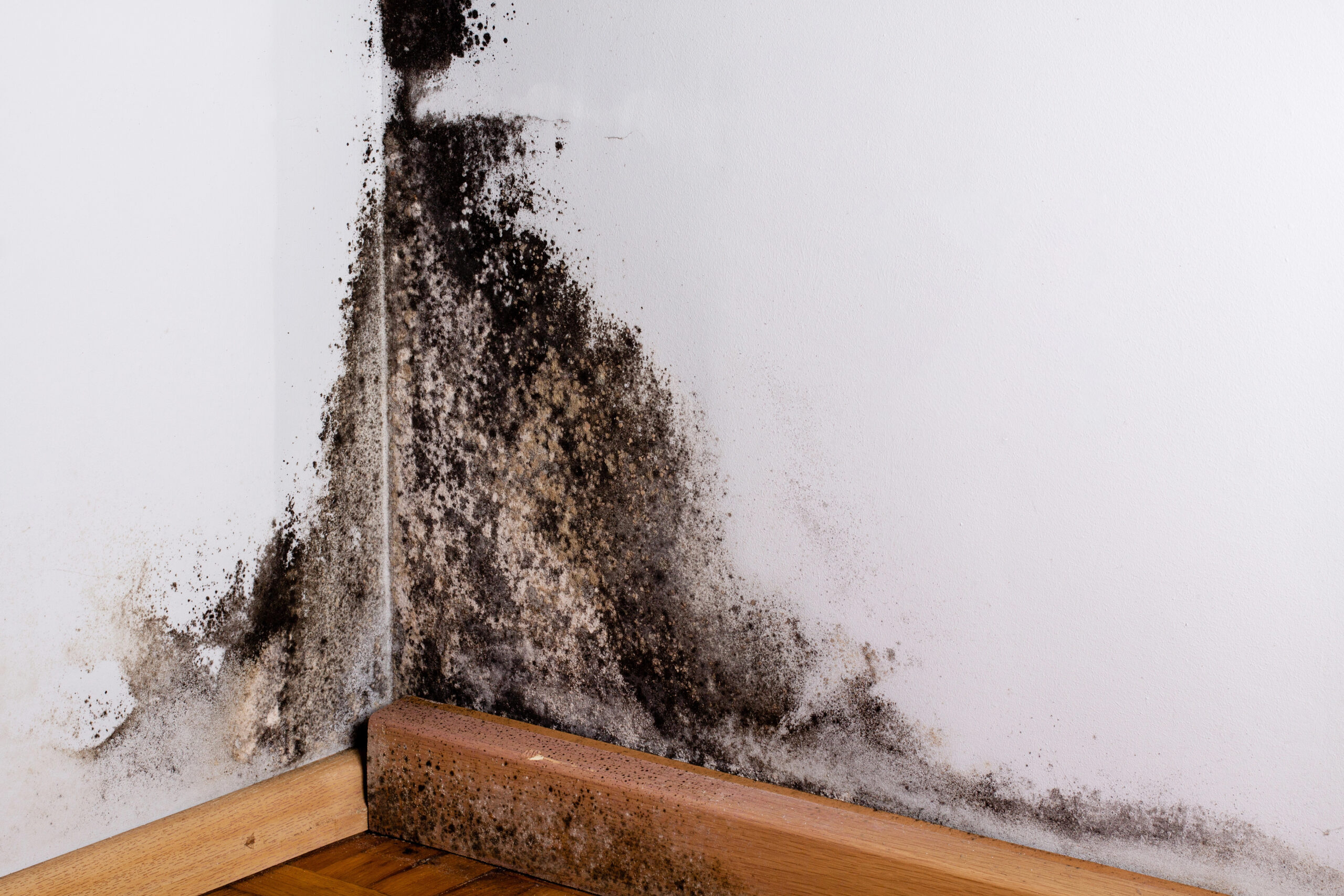
- Black mould spots in corners, behind wardrobes, or on ceilings (often condensation)
- Peeling wallpaper/paint and salty “tide marks” (can indicate dampness in masonry)
- Musty smells, damp carpets, or skirting damage
- Mould growth in bathrooms/kitchens where an extractor isn’t working
Outside (or communal areas for a tenement):
- Blocked gutters, broken downpipes, staining on external walls
- Cracked pointing, failed render, or leaking overflows
- Poor airflow in common stairwells (tenement issues can worsen moisture retention)
Prevent mould and reduce condensation: practical steps that actually work
You can’t “ventilate your way out” of a building defect, but many homes do need better moisture management alongside repairs.
Here are realistic measures that help prevent mould and reduce condensation:
- Ensure working extractor fan units in the bathroom and kitchen (and confirm they vent outside properly).
- Make sure trickle vents and air bricks are not painted over or blocked; add passive vents where appropriate.
- Encourage a steady heating pattern rather than short bursts: keeping the home reasonably warm reduces cold-surface condensation.
- Address cold bridging where possible (insulation upgrades, thermal lining, or targeted improvements).
- Provide (and maintain) a suitable drying option: if there’s no external drying space, consider whether a tumble dryer (or access to one) is realistic. A condenser or vented tumble dryer can reduce internal moisture compared to drying clothes on radiators all winter.
- Recommend simple behavioural points without blaming: keep the door closed when showering, run the fan during and after a shower or bath, and avoid pushing large furniture tight to external walls so you allow air to circulate.
- Small, consistent habits help: opening windows for short “purge ventilation” is often better than leaving a window open all day in winter. Even opening a window for 5–10 minutes after cooking can help vent moist air.
Dealing with damp: what to do when a tenant reports it
A tenant should be told (in writing) how to report damp early, because it often gets worse over time. Shelter Scotland advises tenants to report damp and mould as soon as they notice it.
When the tenant reports damp, your process should be predictable and well-documented:
- Acknowledge within 24–48 hours Confirm you’ve received the report and outline the next steps.
- Triage the risk Ask whether anyone has health conditions, whether there’s a child under 5, and whether the mould is extensive. A person-centred approach is increasingly expected in cases involving damp and mould.
- Arrange an inspection quickly Don’t rely on photos alone. Inspect the area, look for moisture sources, check ventilation, and check the outside as well. Aim to complete your investigation within ten working days so you are in line with the new Awaab’s Law timescales.
- Record evidence properly Take dated photos, note the humidity/temperature if possible, and log your findings (including whether the home appears adequately ventilated and heated).
- Identify the root cause Is it condensation, penetrating damp, rising damp, or a mix? If it’s unclear, seek a professional diagnosis.
- Start repairs and mitigation Even while you’re arranging contractors, you can often take immediate steps: fix a broken fan, clear a gutter, seal a known leak, or provide temporary dehumidification.
- Communicate clearly Provide the tenant with a written plan and the dates. Keep them updated on any part delays.
- Re-check after work Confirm the issue has improved. If not, reassess and escalate to a deeper investigation.
The landlord must avoid a “wipe and go” approach. Cleaning and repainting without addressing the root cause often leads to recurring mould and condensation within weeks.
Also, don’t threaten to evict a tenant for raising disrepair concerns. It’s the fastest way to escalate conflict and scrutiny, and it won’t solve the damp problem anyway.
Repairs that usually fix the problem (not just the symptoms)
A good landlord response is focused on the building and its systems:
- Fix external water ingress: roofs, flashing, pointing, render defects, and any overflowing gutters
- Repair plumbing leaks and overflows (including hidden leaks inside walls)
- Improve ventilation: add/upgrade extractor fans, ensure vents are clear, check air paths
- Improve heat retention: draught sealing, insulation improvements, addressing cold bridging
- Where appropriate, treat rising damp properly (and ensure the damp-proof course isn’t bridged)
If mould remains after fixing moisture sources, remove mould safely and redecorate using suitable products, but only once surfaces are dry and the cause has been addressed.
Documentation and compliance: protect the tenancy and your position
If a dispute arises, your best protection is evidence that you acted quickly, reasonably, and effectively:
- Keep all tenant communications (dates, photos, messages)
- Keep contractor reports and invoices
- Maintain a simple damp-and-mould log per property
- For repeat cases, document what changed (ventilation upgraded, leak repaired, insulation improved, etc.)
If a tenant believes the property does not meet the repairing standard, they can apply to the Housing and Property Chamber, which can order repairs.

Landlord checklist for 2026 (damp and mould)
Use this checklist at every new tenancy and at least annually (ideally before winter):
Building envelope
- Roof, flashing, and masonry visually sound
- Gutters/downpipes clear and not leaking (gutter checked after heavy rain)
- Window/door seals intact; no visible water ingress on frames
Internal moisture risks
- Bathroom extractor fan working and venting outside (extractor fan tested)
- Kitchen extraction working (or adequate alternative ventilation)
- Trickle vents / passive vent points are clear and usable
- Bedrooms and living areas can be reasonably heated (radiators working; thermostat functional)
High-risk locations
- Corners, window reveals, behind furniture (especially on external walls)
- Ground floor perimeters (check for rising damp indicators)
- Tenement common walls and any known cold spots (tenement properties often need extra attention)
Tenant guidance (without blame)
- Provide a simple “reduce condensation” guide: heating pattern, short bursts of ventilation, and laundry drying advice
- Mention drying clothes risks and suggest dry clothes outside when possible, or use a tumble dryer where available
- Explain how to report issues early and what response they can expect (report damp process)
Response readiness
- Confirm your inspection workflow and preferred contractors
- Ensure you can investigate quickly and start repairs promptly – for example, by planning to complete investigations within ten working days and to commence any necessary safety work within a further five working days, in line with the draft 2026 damp and mould regulations that are expected to come into force later in 2026.
Be proactive, not reactive
The best outcomes come when you treat dampness as an asset-protection issue, not a tenant dispute. If you know the cause, you can fix it properly, and you’ll avoid repeat call-outs, redecorating cycles, and strained relationships.
References
- [Investigation and Commencement of Repair (Scotland) Regulations 2026 (draft) – amends Housing (Scotland) Act 2006 s13(1). https://www.legislation.gov.uk/sdsi/2026/9780111065099/note]
- [Scottish Government: Repairing Standard statutory guidance for private landlords. https://www.gov.scot/publications/repairing-standard-statutory-guidance-private-landlords/pages/11/]
- [First-tier Tribunal (Housing and Property Chamber): Repairs application guidance. https://housingandpropertychamber.scot/apply-tribunal/repairs/repairs-application-guidance]
- [Investigation and Commencement of Repair (Scotland) Regulations 2026 – reg 3(3) explanatory note. https://www.legislation.gov.uk/sdsi/2026/9780111065099/note]
- Scottish Government announcement: tenants to be better protected from damp and mould (Jan 2026). https://www.gov.scot/news/tenants-to-be-better-protected-from-damp-and-mould/]